
The 11 Curves That Changed Controller Design
At PB TAILS, we believe the most profound connections often begin with a curve —
not a random bend, but a line with intention: a whisper of physics, a story of speed, and a promise of perfection.
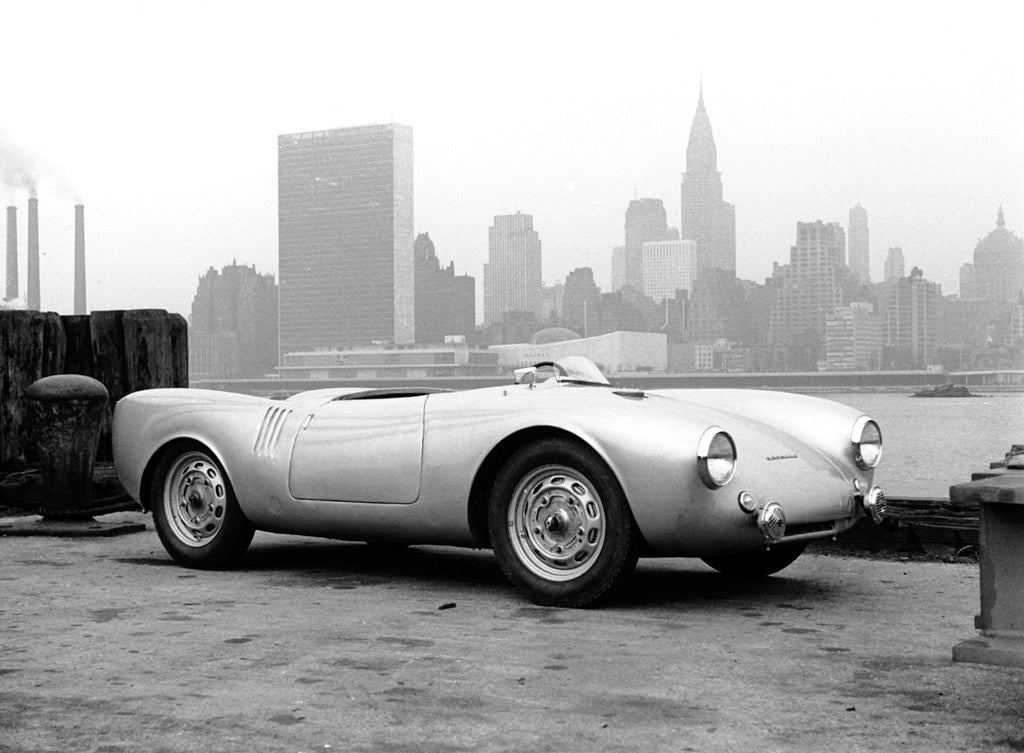
This is the story of how the timeless silhouette of the 1955 Porsche 550 Spyder found its way
from the racetracks of Germany into the palm of your hand.

A Question That Changed Everything
For decades, controller design was dictated purely by function — pragmatic angles, predictable ergonomics.
We asked a different question:
What if a controller didn’t just feel good, but felt right — like it was born to be there?
The answer didn’t come from a lab.
It came from a museum.

The Muse: Porsche 550 Spyder
When our lead designer stood before the 550 Spyder at its 70th-anniversary exhibition in Stuttgart,
they didn’t just see a car — they saw a manifesto of motion.
The 550 wasn’t designed in a wind tunnel — it was born from one.
Every curve served a purpose: to slice through air, to hug the road, to become one with the driver.
That realization sparked our philosophy:
The grip of a controller and the grip of a steering wheel share the same mission —to create a seamless, confident connection between human and machine.

The 11 Curves: A Blueprint for a Revolution
We deconstructed the 550’s form, isolating eleven foundational curves that defined its soul.
Here’s how three of them transformed the PB TAILS CRUSH Series:
1. The Fender Swell (Curve #3)
The 550’s pronounced rear fenders — which manage airflow and stability — inspired the controller’s palm-swell contours.
This isn’t just comfort; it’s a lockdown grip that prevents slippage during intense gameplay, mirroring the car’s hold on the tarmac.
2. The Windshield Arc (Curve #7)
The single, sweeping curve of the windshield became the trigger-well profile.
It allows your index fingers to rest in a natural, relaxed posture, reducing fatigue over long sessions —
a lesson in endurance from a car built for the grueling Mille Miglia.
3. The Door Silhouette (Curve #5)
The subtle dip behind the 550’s door — a hallmark of its lightweight construction — was translated into the precise indent for your middle fingers.
This provides a secondary anchor point, creating a sense of the controller being actively pulled into your hands, not just held.

Stuttcars. (n.d.). Porsche 550 RS Spyder (1954–1956). Retrieved [date you accessed the page], from https://www.stuttcars.com/1954-porsche-550-rs-spyder/
Form Follows Function — and Then Elevates It
This isn’t styling for the sake of style.
It’s performance through design.
Micro-Movement Precision
The 550-inspired geometry gives you a more stable, predictable grip —
translating directly to pixel-perfect accuracy with our TMR joystick.
Confidence Through Form
When your controller feels like a natural extension of your body,
you move differently. You trust differently. You perform differently.
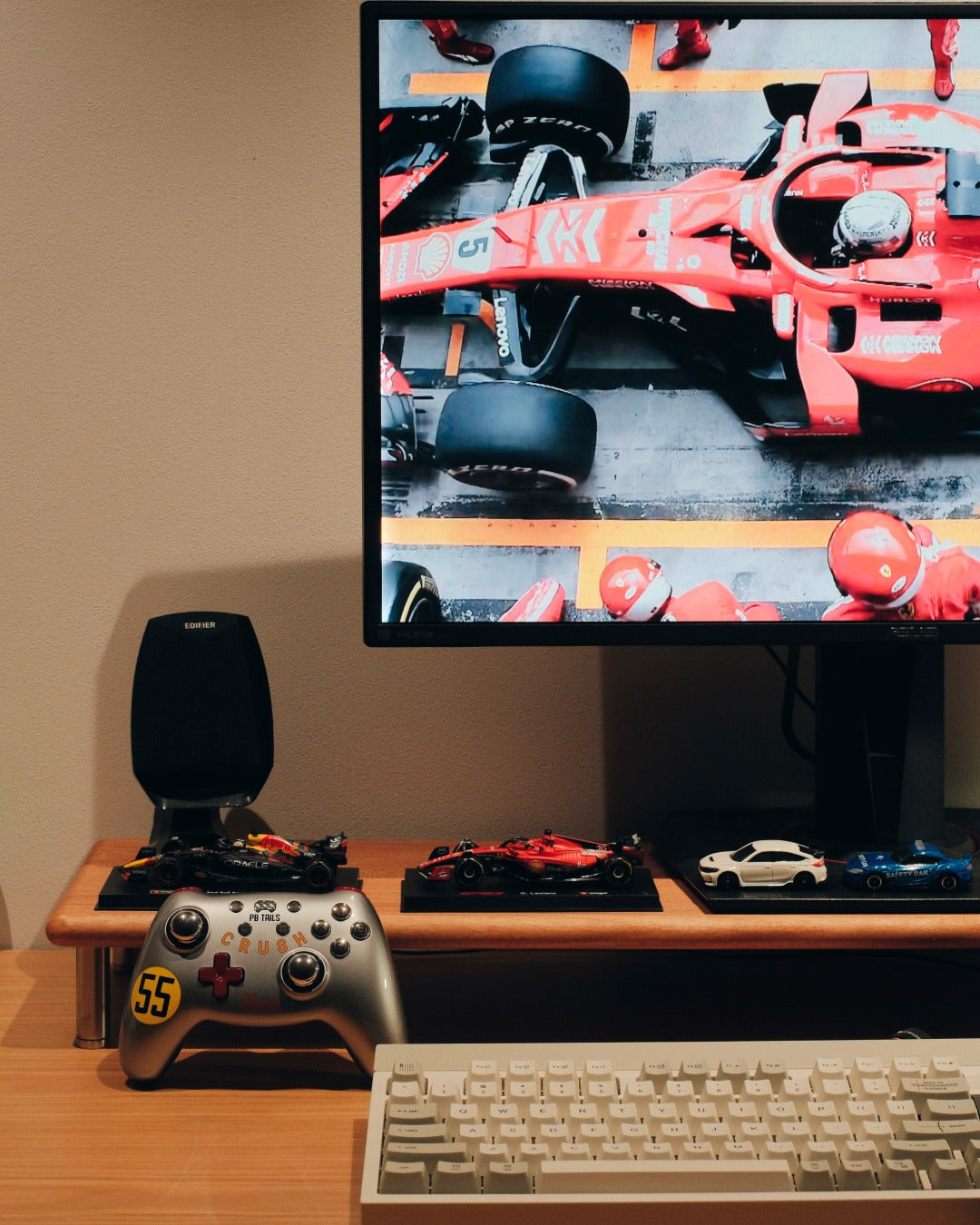
Your Desk, Your Driver’s Seat
We didn’t set out to make a controller that looks like a car.
We set out to build one that feels like a car — one that embodies the same purity of purpose, the same marriage of form and function that makes a classic sports car an object of desire.
The Porsche 550 was a revolution on wheels.
It proved that the most efficient shape is often the most beautiful.
We’ve simply carried that truth from the asphalt to your desktop.
The PB TAILS Promise
Every element — down to the eleventh curve — exists with purpose.
For your performance. For your pleasure.
Because the pursuit of perfection doesn’t end at the finish line —
it begins in your hands.
🎮 Experience the legacy.
Hold the CRUSH, and feel the 550 Spyder for your greatest gaming victories.



コメントを書く
全てのコメントは、掲載前にモデレートされます
このサイトはhCaptchaによって保護されており、hCaptchaプライバシーポリシーおよび利用規約が適用されます。